
Reskilling, upskilling, and agentic skills
Work is being redesigned around skills across people, systems, and organisations

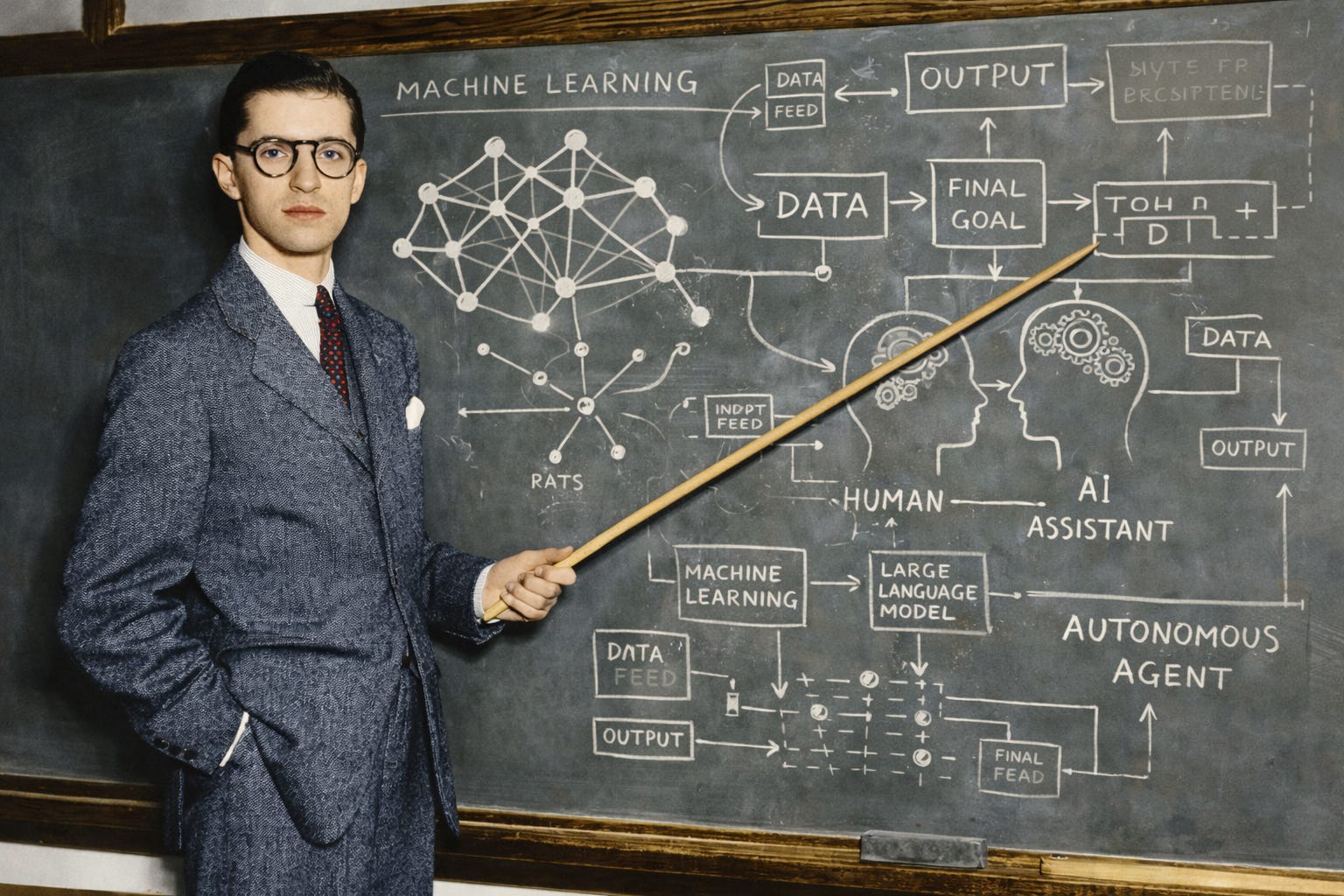
Across industries, organisations are reskilling and upskilling their people in response to AI. This is often framed as a technology shift, while the bigger change sits in how work itself is structured and how responsibility is distributed.
History offers a useful reminder. In previous technological revolutions, meaningful efficiency gains only appeared once work itself was redesigned around the new capabilities, rather than simply layered on top of existing roles and processes.
This work redesign is now underway. Helping people adapt to this shift has moved from a development initiative to a core organisational responsibility.
Roles are evolving. Tasks are being unbundled. Expectations are changing faster than job descriptions can keep up. In this environment, skills become the primary unit of work design rather than titles or functions.
A shared language of skills
At the same time, the language of “skills” has started to appear somewhere else.
Agentic systems are increasingly described by the skills they possess rather than by feature lists. This subtle shift in vocabulary signals a deeper change in how technology is positioned within organisations.
These skills tend to fall into two broad categories.
The first includes general skills such as managing calendars, handling email, organising documents, and maintaining spreadsheets. These are coordination and information-handling capabilities that support the flow of work across roles and environments. They mirror the foundational skills expected of many human roles and tend to translate well across contexts.
Alongside these, more advanced skills are being designed that resemble specific professional capabilities. Legal expertise, accounting know-how, investment analysis, compliance interpretation, and other functional skills are increasingly being modelled into systems.
These specialist skills are domain-specific. They require deeper context, stronger judgment, and clearer boundaries. Their usefulness depends heavily on how well they are grounded within an organisation’s norms, governance, and risk appetite.
This overlap in vocabulary is arguably the link that was required to usher in the next phase in our agentic revolution. Broadly, work is being decomposed into individual skills that can be learned, combined, and delegated. This applies to people and to systems at the same time.
Why is this problem more complex for family offices?
Family offices encounter this challenge in layered form, and often with fewer structural supports.
They need to consider reskilling within the design and operation of the family office. At the same time, they oversee operating and industrial businesses where work design may be shifting at a different scale and with more industry-specific dynamics. Alongside this, they continuously evaluate existing and prospective investments shaped by AI-driven changes in productivity, organisation, and long-term relevance.
Each layer brings different constraints and expectations.
Unlike larger organisations, family offices rarely have dedicated functions focused on learning, development, or career progression. Upskilling and education often happen informally, if at all, even as expectations on teams continue to rise.
This creates a tension. AI is already altering how work gets done, and people are expected to adjust alongside it while maintaining existing levels of performance and accountability. When upskilling is left to individuals to navigate on their own, cracks start to appear. Confidence can erode, and informal workarounds can become the norm.
General skills often translate well to agentic support across these contexts. Specialist skills require greater care, particularly where trust, confidentiality, and long-term stewardship are central. What works inside a scaled operating company does not automatically belong inside a family office environment.
An imperative, not a side project
AI is already altering how work gets done. Employees are expected to adjust alongside it, often while maintaining existing levels of performance and accountability.
When organisations treat upskilling as optional or leave individuals to navigate this transition alone, fragility emerges. Confidence erodes. Informal workarounds take hold. Judgment weakens under pressure.
Reskilling supports continuity as much as productivity. It allows organisations to absorb change without losing coherence.

Re-, up- and AI-skilling as work design
Reskilling is often framed as teaching people to use new tools. A more durable lens is work design and not just AI upskilling. The practical questions tend to look similar across organisations:
Which skills remain human-led?
Which skills are shared with agents?
Which skills require additional governance before delegation?
Organisations that treat reskilling as a human-only problem or AI as a tool-only problem miss the structural nature of the change...
These decisions shape resilience, judgment, and institutional memory over time. They apply to people and systems together, and they determine whether AI strengthens an organisation or quietly introduces new points of failure.