


Later this week Simple will go live with the 7th edition of our annual FO tech report. Some interesting tools and findings coming next Sunday.
Did a friend or colleague forward this to you?
Subscribe below.
Optimism Without A Policy
Bank of America Private Bank published its 2026 Family Office Study on 20 October, surveying 355 US family office decision makers. Eight in ten think AI could improve investment returns and 42 per cent say they use it today. 83 per cent have identified a successor, yet only 27 per cent have a trust distribution policy or guiding principles in place.
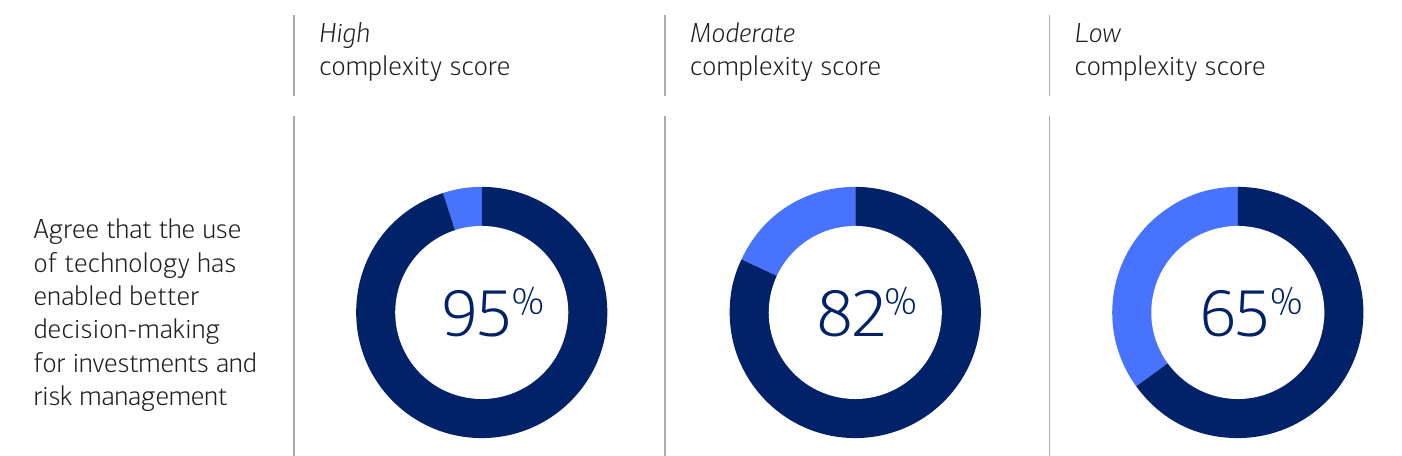
Signal: Adoption is running ahead of written policy, so a family office using AI should put its rules for that use in writing.
Bank of America Private Bank (6 minutes)
Productivity Gets Priced In
J.P. Morgan Asset Management’s 2027 Long-Term Capital Market Assumptions project 7.0 per cent annual returns for a 60/40 dollar portfolio over 10 to 15 years, rising to 7.5 per cent with 30 per cent in diversified alternatives. The forecast assumes a global investment surge centred on AI lifts total factor productivity by half, to 120 basis points.
Signal: When a return forecast assumes AI lifts productivity, an office using that forecast should note whether it agrees with the assumption and review it each year.
J.P. Morgan Asset Management (5 minutes)
Governance Beats Returns
BlackRock and Preqin surveyed 206 Americas single-family offices representing $491 billion in investable assets. Governance and decision-making ranked the greatest challenge, named by 28 per cent against 24 per cent for target returns. Only 30 per cent reported highly formalised governance, and 18 per cent reported lower operating costs from AI.
Signal: Family offices are adding complexity faster than they assign decision rights, so governance design needs a named owner and a regular review.
The Software Becomes Trustee
Trust & Will is launching Trust & Will Trust Company, a Nevada-chartered retail trust company with the authority to act as a professional corporate trustee, WealthManagement.com reported on 16 October. It is aimed at households with less than $10 million and has no minimum account size, where established trust companies often set minimums in the tens of millions. The company describes itself as the first digital estate planning platform to serve as a regulated corporate fiduciary.
Signal: A corporate trustee priced for households under $10m puts a software firm inside succession arrangements that families used to handle through a bank or a private trust company.
WealthManagement.com (3 minutes)
The Rules Already Apply
The Financial Conduct Authority published a good and poor practice guide on AI in financial services on 19 October, saying existing rules already apply. Its examples include central AI governance bodies, named accountability, human oversight, third-party resilience, and auditable records of prompts, outputs, model versions and escalation decisions.
Signal: AI oversight needs owners assigned for procurement, model monitoring, complaints and senior management, with records that can be audited.
Model Access Gets Gated
A Department of Homeland Security order, published in the Federal Register on 20 October, excludes Hangzhou DeepSeek Artificial Intelligence products from federal civilian procurement and requires agencies to remove existing deployments, including third party products built on DeepSeek. Separately, OpenAI said that from 20 November, model routers and AI gateways offering direct access to its models need OpenAI’s review and approval first.
Signal: A government or a vendor can withdraw or restrict the model a tool runs on, so contracts should name the model providers each tool depends on and say what happens if one is withdrawn.
Federal Register (2 minutes) and OpenAI (3 minutes)
Compute Gets Portable
Google open-sourced TorchTPU on 20 October, making its TPUs a native PyTorch target alongside GPUs and CPUs, co-developed with the PyTorch team at Meta. Google reports up to 52 per cent model FLOPs utilisation on Qwen 3 8B and near-linear scaling across up to 8,192 Ironwood TPUs, with integrations for vLLM, SGLang and Hugging Face. The performance figures are Google’s own.
Signal: If PyTorch workloads can run on TPUs as well as GPUs, vendor reviews should ask what it would cost to move a workload to another compute supplier.
The Last Word
“It should not replace or disrupt anything good that already exists, and this includes family and community relationships.”
Wendell Berry, “Why I Am Not Going to Buy a Computer” (1987)
Wendell Berry wrote this in 1987 to explain why he’d keep writing in pencil while his wife typed his drafts. It’s the last of his nine standards for any new tool, and a lot of his appeal comes from that grounded case for local community, care for the land and a simpler life. The comfort only goes so far, though. You can decline to buy the new computer, but it’s now all around you, in your bank, your advisers’ systems and the software that runs your trusts. Berry’s test still holds for a family office. The question isn’t whether AI arrives. It’s whether it disrupts the relationships that hold the family together.
Want To Work Together?
Hi, I’m Francois. I have been tracking how family offices actually run for over a decade, and at Simple we openly publish what we learn: the research, the frameworks, the vendor landscape, what worked and what quietly did not. This newsletter is part of that.
The rest of the time we help offices put it into practice, from strategy and governance to operating design and technology, across Europe and the Americas, and anywhere a principal invites us to a meeting room with snacks, coffee and a whiteboard.
If you are working out what any of this means for your own setup, a conversation costs nothing. Schedule a call with me.
Share Simple Signals
The Sunday search for signal in the family office industry.
The gap between adopting new wealth-management technology and establishing the governance behind it is worth examining. Digital trustees may reduce operational friction, but they cannot resolve unclear distribution principles or decision rights. For family offices, the real question may be whether governance is evolving alongside the tools—or whether faster execution is simply making existing ambiguities harder to reverse.